Yes, you can learn English, math, and science as an adult—and you may actually learn them better now than you would have as a teenager. Adult learners bring focus, real-world motivation, and life experience that younger students simply don’t have. The key is a realistic roadmap that fits around a busy life, builds confidence first, and treats setbacks as part of the process rather than proof you “can’t do it.”
If you’ve ever thought I’m too old to start now or my brain doesn’t work that way anymore, this guide is for you. Below is a practical, step-by-step roadmap for learning as an adult, whether your goal is speaking English fluently, finally understanding the math that intimidated you in school, or getting comfortable with the sciences.
Why Learning as an Adult Is Different (and Often Easier)
There’s a myth that children are sponges and adults are stones—that after a certain age, the window for learning closes. The research tells a different story. Adults learn differently, not worse.
When you’re learning as an adult, you have advantages a ten-year-old doesn’t:
- You know why you’re learning. A child studies English because a schedule tells them to. You’re learning it to get a promotion, talk to your child’s teacher, pass an exam, or feel less isolated. That motivation is fuel.
- You can connect new ideas to real experience. Learning percentages makes sense when you’ve paid a mortgage. Understanding chemistry clicks when you’ve cooked thousands of meals. Your life is a library of examples.
- You can direct your own learning. You choose what to focus on, when to study, and what “success” means. Adult learners aren’t passive—and that control is powerful.
The challenge isn’t your brain. The challenge is time, confidence, and knowing where to start. That’s exactly what this roadmap solves.
The 5-Phase Roadmap for Busy Adult Learners
Phase 1: Start With Confidence, Not Content
Most people who struggle with learning as an adult don’t have a knowledge problem—they have a confidence problem. Years of “I was always bad at this” become a story you believe. Before you memorize a single vocabulary word or math formula, your first job is to rewrite that story.
Start ridiculously small. If you’re learning English, speak three sentences out loud today—to yourself, to a pet, to a patient friend. If you’re tackling math, solve one problem you already know how to do, just to feel the win. Confidence isn’t something you find before you start; it’s something you build by starting. This is the “Feel” at the heart of learning: when you feel capable, you keep going.
Phase 2: Set a Realistic Goal (Then Cut It in Half)
Busy learners fail when they set heroic goals—”I’ll study two hours every night”—and then quit after three days when life gets in the way. A realistic goal survives a bad week.
Instead of two hours a day, commit to fifteen focused minutes, four days a week. That’s an hour a week, and over a year it’s more than fifty hours of real progress. Small and consistent beats big and abandoned every single time. Whether you’re going back to studying English, math, or science, the rule is the same: build a habit you can actually keep.
Phase 3: Learn in the Right Order
Each subject has a natural sequence, and skipping steps is where frustration lives. Here’s the confidence-first order for each:
Learning English as an adult:
- Listening and understanding (train your ear before your tongue)
- Speaking in simple, everyday phrases
- Reading things you actually care about
- Writing and grammar refinement
You don’t need perfect grammar to start speaking. Communication first, polish later.
Learning math as an adult:
- Rebuild number confidence (arithmetic, percentages, fractions)
- Pre-algebra foundations
- Algebra
- Whatever your specific goal requires (statistics, geometry, exam-specific topics)
Math is a staircase—each step depends on the one below it. If a topic feels impossible, the real gap is usually one step lower.
Learning science as an adult:
- Core vocabulary and the “why” behind the subject
- Foundational concepts (the big ideas)
- Connecting concepts to real life
- Applying and problem-solving
Phase 4: Practice Actively, Not Passively
Re-reading notes and watching videos feels like learning, but it’s one of the weakest ways to actually retain anything. Active practice—where you produce something instead of just absorbing—is where real learning happens.
For adult learners, active practice looks like: speaking English out loud instead of just listening to it, solving math problems instead of watching someone else solve them, and explaining a science concept in your own words instead of highlighting a textbook. If you can teach it simply, you understand it. If you can’t, you’ve found your next thing to study.
Phase 5: Get Support—You Don’t Have to Do This Alone
The single biggest predictor of whether an adult sticks with learning isn’t talent or free time—it’s support. A guide who believes in you, answers your “silly” questions without judgment, and adjusts to how you learn changes everything.
This is where a tutor becomes worth far more than an app. Apps can’t see the moment your confidence dips. They can’t reassure you when you freeze. They can’t celebrate the breakthrough when English, math, or science finally clicks. A patient human can—and for many adult learners, that human support is the difference between quitting in month one and still going strong in month twelve.
Common Roadblocks for Adult Learners (and How to Get Past Them)
“I don’t have time.” You don’t need more time; you need smaller sessions. Fifteen minutes in a waiting room, on a commute, or before bed adds up. Busy learners succeed by fitting learning into life, not by clearing their life for learning.
“I’m embarrassed to make mistakes.” Mistakes aren’t a sign you’re failing—they’re the exact mechanism by which learning happens. Every fluent English speaker was once a beginner who said things wrong. Every confident math student once got answers wrong. The people who succeed are simply the ones who kept going.
“I’ve tried before and quit.” Quitting once doesn’t mean you can’t do it—it usually means the method didn’t fit you. Going back to studying with the right approach, realistic goals, and real support is a completely different experience.
“I’m too old.” The best time to start was years ago. The second-best time is today. Adults in their 40s, 60s, and 80s learn new languages, master math, and understand science every day. Your age is not the obstacle you think it is.
Your First Step Today
Learning as an adult isn’t about being naturally gifted or having endless free time. It’s about starting small, building confidence, following a realistic order, practicing actively, and getting the right support along the way. English, math, and science are all learnable—by you, starting now.
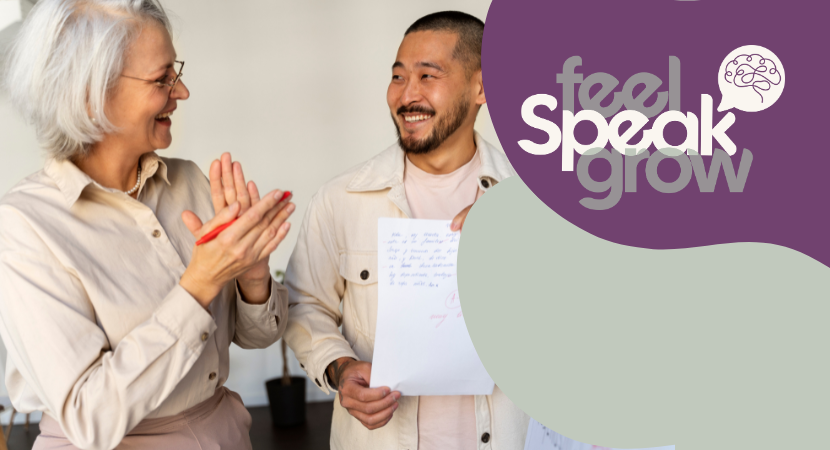
At Speak Feel Grow, we specialize in exactly this: helping adult learners gain the confidence to learn English as a second language, as well as mathematics and sciences—no judgment, no rush, just steady progress at a pace that fits your life. Whether you’re going back to studying after years away or starting fresh, we meet you where you are.
Ready to begin? Explore our related guides on building confidence to speak English and overcoming math anxiety at any age, or reach out to start your own roadmap with a tutor who believes you can do this—because you can.
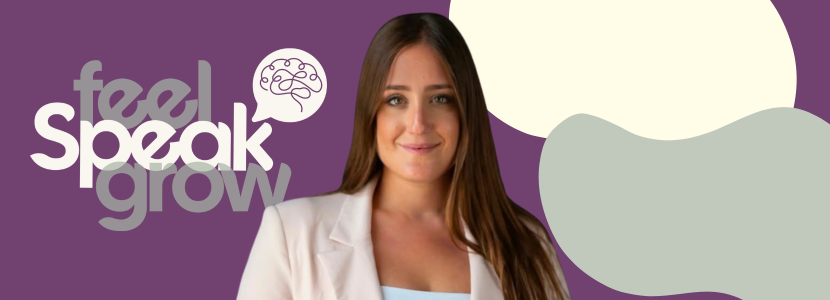
At Speak Feel Grow, we offer confidence-first tutoring in English, mathematics, and sciences for learners of every age and background.
- Claudia Martinez / Founder
If you are ready for a demo class, have questions and want to learn how we have helped a lot of students that once were facing learning challenges, go ahead and schedule a free 15-minute call and discover how at Speak Feel Grow, the sky is the limit!